
Progressive Transplanting vs. Direct Final Pot: Which Strategy Reduces Root Stress and Accelerates Growth
Progressive transplanting reduces root stress by allowing gradual root development, while direct sowing in the final pot can slow initial growth due to excess space and nutrients. Scientific evidence and practical experience recommend progressive transplanting to accelerate growth more consistently.
Progressive Transplanting vs. Direct Final Pot: Which Strategy Reduces Root Stress and Accelerates Growth
Every grower, whether novice or experienced, faces a key decision when starting a cycle: is it better to transplant progressively (from seedling tray to small pot, then to medium, and finally to the final pot) or to sow directly in the final pot? Both strategies have staunch defenders, but cultivation science and practical experience indicate that one of them minimizes root stress and accelerates growth more consistently. In this article, we will analyze the pros and cons of each method, relying on real data on nutrient management and root stimulation.
What Do We Mean by Root Stress and Why Is It Critical?
Root stress occurs when roots suffer mechanical damage, dehydration, suffocation, or sudden changes in the substrate and nutrient availability. A stressed root system reduces water and mineral absorption, resulting in slower growth, yellowing leaves, and lower resistance to pests.
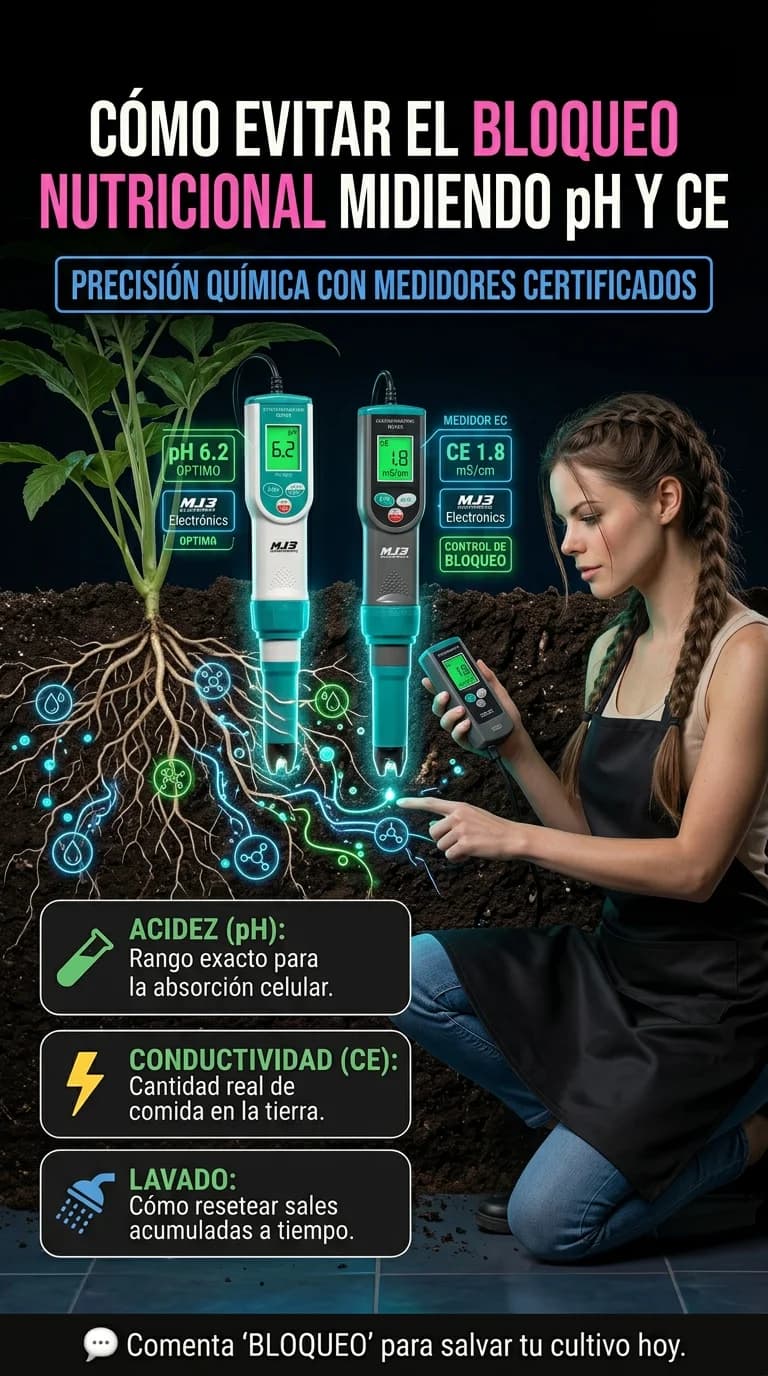
A fundamental parameter comes into play here: EC (Electrical Conductivity). As explained in our knowledge base, EC measures the concentration of dissolved salts in irrigation water. A poorly managed transplant can cause the plant to move from a substrate with a stable EC to one with very different levels, causing imbalances that burn roots or create deficiencies. Therefore, any transplant strategy must consider not only the container size but also the nutritional transition.
Progressive Transplanting: Control and Gradual Development
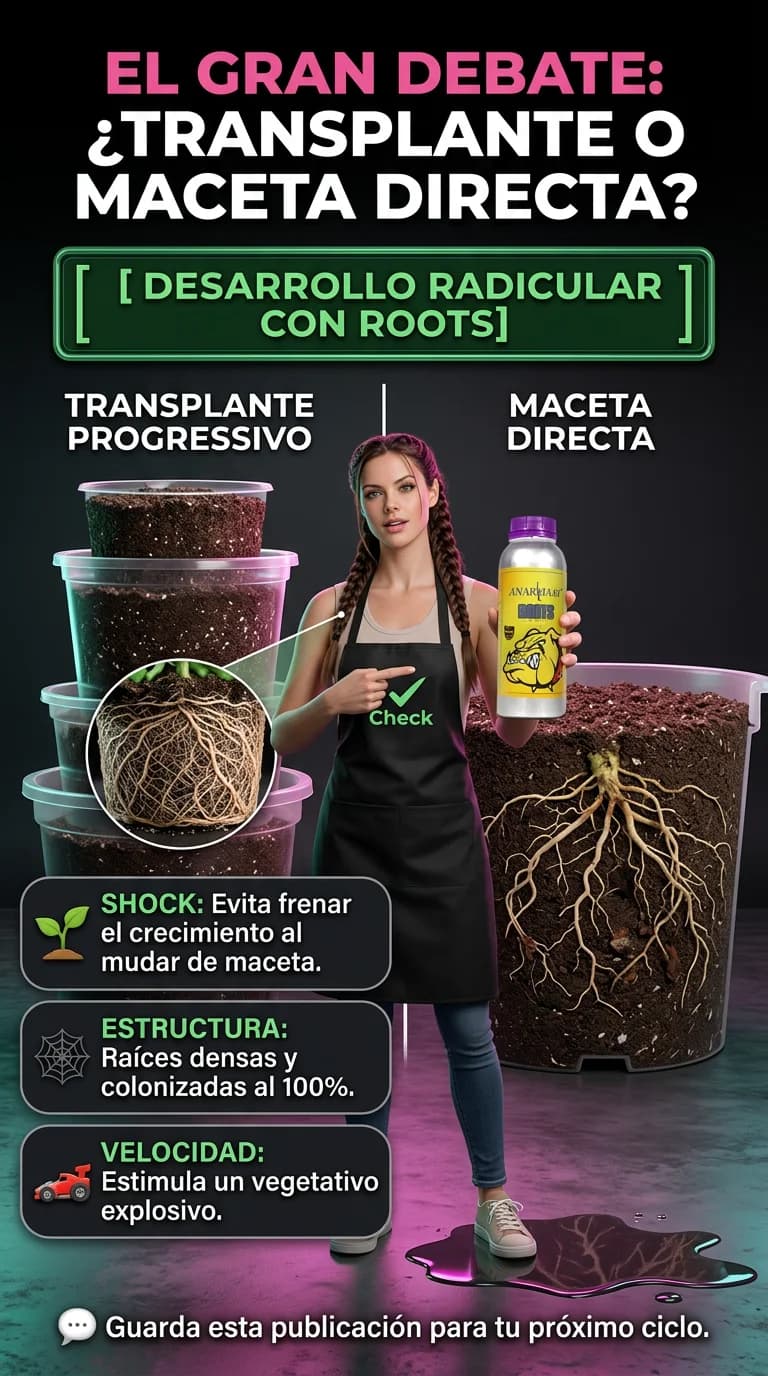
The progressive method involves starting seedlings in a seed tray or small pot (0.5-1 L), transplanting them to an intermediate pot (3-5 L), and finally to the final pot (10-20 L or more). This technique allows the root system to explore increasing volumes of substrate without facing excess space that could cause waterlogging or dry zones.
Key advantages:
- Lower risk of over-fertilization: By gradually increasing the substrate volume, EC can be better controlled, avoiding salt spikes that burn young roots.
- Denser root development: Roots are forced to colonize all available substrate before moving to the next container, creating a more fibrous and efficient system.
- Stimulation with specific products: During each transplant, it is the ideal time to apply root stimulators like [producto:root-k-anarkia81-1-l] or [producto:roots-anarkia81-1250-ml], which accelerate the regeneration of root hairs and reduce shock.
Disadvantages:
- Requires more time and handling (each transplant involves manipulating the plant and substrate).
- If not done carefully, it can damage roots and cause additional stress.
Direct Final Pot: Simplicity with Risks
Sowing directly in the final pot saves work and avoids intermediate transplants. However, this strategy presents significant challenges for early root development.
Advantages:
- Less plant manipulation, reducing the risk of mechanical breakage.
- Roots can grow without restrictions from day one, without needing to adapt to new containers.
Critical disadvantages:
- High risk of waterlogging: In large pots, the substrate takes longer to dry, which can cause root suffocation in seedlings with small systems.
- Nutritional imbalance: It is difficult to maintain a uniform EC in a large volume of substrate when the plant barely consumes water. This can lead to salt accumulation at the bottom of the pot.
- Less dense roots: Having unlimited space from the start, roots tend to grow searching for water without colonizing all the substrate, generating a less branched system.
What Does Practice Say About Stress and Growth?
Growers who opt for progressive transplanting often report more vigorous growth during the first 4-6 weeks. The main reason is that each transplant stimulates the production of new lateral roots, especially if biostimulants like [producto:plata-root-anarkia81-300-ml] or mycorrhizal inoculants like [producto:granular-1-anarkia81-1-kg] are used. These products help roots recover within 24-48 hours, minimizing stress.
Conversely, in direct final pot, seedlings usually show slower growth during the first two weeks, as they dedicate more energy to developing long roots instead of a dense system. Additionally, the risk of root rot is higher if watering is not strictly controlled.
Conclusion: The Winning Strategy to Reduce Stress and Accelerate Growth
Based on practical experience and the principles of EC and pH management, progressive transplanting is the most recommended strategy for most growers, especially if the goal is to maximize root development and minimize stress. This method allows precise control of nutrition, avoids waterlogging, and with the help of root stimulators like [producto:root-k-anarkia81-5-l], accelerates recovery after each pot change.
Direct final pot can work in very experienced cultivations with extremely aerated substrates and irrigation systems.
More articles

Complete guide to pH and EC in cannabis cultivation: How to calibrate, measure, and adjust without harming your plants
How to Read pH and EC in Substrate: A Practical Guide to Preventing Nutrient Lockouts in Indoor and Outdoor Growing

Ideal light and distance for each stage: How to avoid light stress and maximize photosynthesis with LED, HPS, and CMH