
Complete guide to pH and EC in cannabis cultivation: How to calibrate, measure, and adjust without harming your plants
Precise management of pH and EC is crucial for cannabis cultivation, as imbalances can block nutrients or burn roots. This guide explains how to calibrate meters, interpret values, and correct deviations without stressing the plants.
Complete guide to pH and EC in cannabis cultivation: How to calibrate, measure, and adjust without harming your plants
Success in cannabis cultivation depends not only on genetics or lighting: precise management of pH and EC (electrical conductivity) is the difference between a mediocre harvest and premium quality production. A half-point pH imbalance can block essential nutrient absorption, while uncontrolled EC can burn roots in a matter of hours. In this guide, we explain how to calibrate your meters, interpret the values, and correct deviations without stressing your plants.
What do pH and EC actually measure?
pH indicates the acidity or alkalinity of the nutrient solution. In cannabis, the optimal nutrient absorption range is between 5.5 and 6.5 in substrate (coco or soil) and between 5.5 and 6.2 in hydroponics. Outside this range, elements like calcium, magnesium, or iron become "locked out" even if present in the solution.
EC measures the concentration of dissolved salts (fertilizers). Low EC causes deficiencies; high EC burns leaf tips and damages the root system. In the vegetative phase, 0.8-1.2 mS/cm is recommended, and in flowering, 1.2-1.8 mS/cm, always adjusting according to the strain and plant condition.
How to calibrate your meters correctly
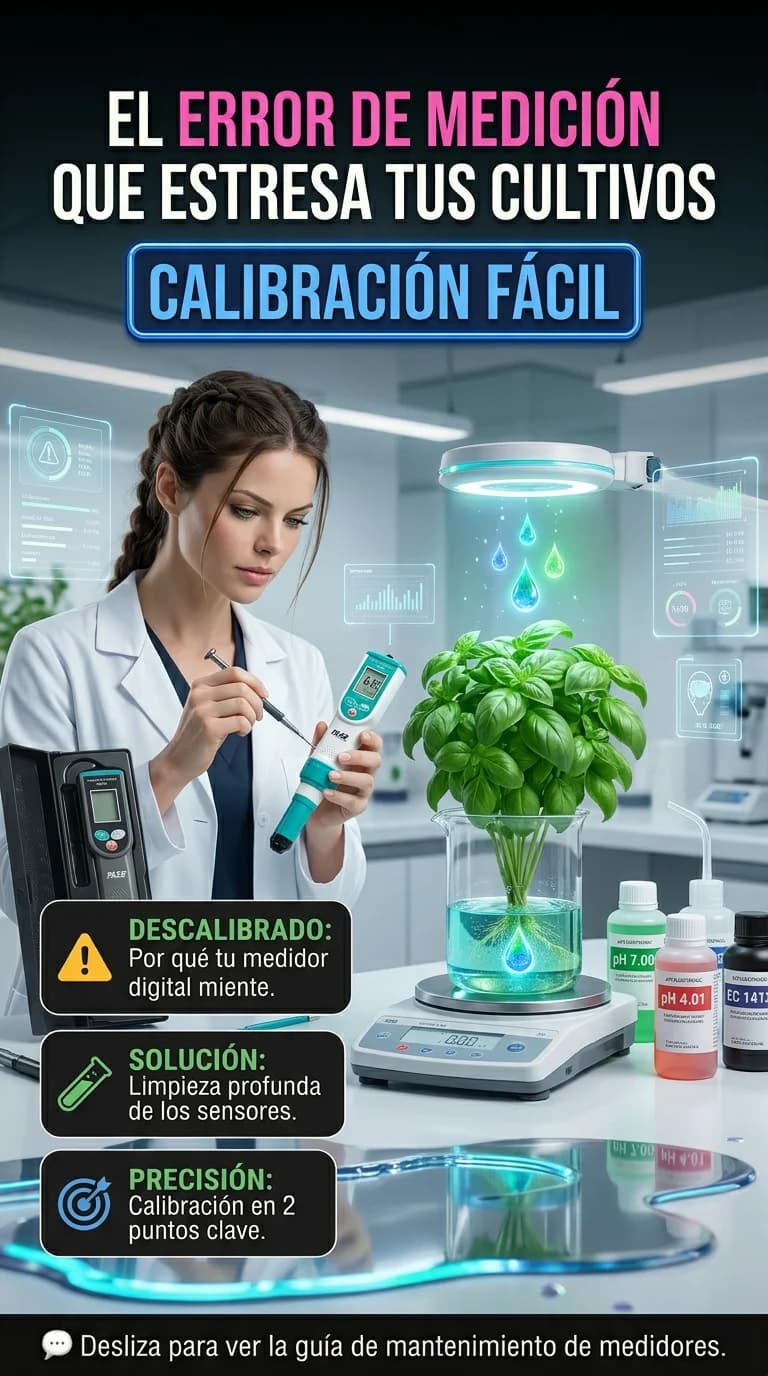
The most common mistake for beginner growers is trusting uncalibrated meters. A 0.3 pH offset can ruin an entire cycle.
For the pH meter:
- Use calibration solutions of pH 4.0 and pH 7.0 (or 6.86 and 4.01 depending on the model).
- Rinse the electrode with distilled water between each solution.
- Adjust the meter following the manufacturer's instructions (usually by pressing "CAL" until the value matches).
- Calibrate every 2-3 weeks or before each use if the meter is entry-level.
For the EC meter:
- Use a standard solution of 1413 µS/cm (or 2.76 mS/cm if your meter allows it).
- Submerge the electrode and adjust using the calibration screw or button.
- If you don't have solution, you can use distilled water (should read 0) but it is not reliable long-term.
Pro tip: Always store electrodes in storage solution (not distilled water) to extend their lifespan.
How to measure and adjust without harming plants
Step 1: Take the correct sample
Always measure the solution after adding nutrients and before watering. If growing in pots, you can also measure the runoff to know the actual pH and EC in the root zone.
Step 2: pH adjustment
- To raise pH (if too acidic): use an alkaline solution like [product:ph-anarkia81-5l], which allows fine control without shocks. Add drop by drop, stir, and measure again.
- To lower pH (if too alkaline): use phosphoric or nitric acid specific for cultivation. Never use household vinegar or lemon juice, as their effect is unstable and can damage the substrate's microbiota.
Step 3: EC adjustment
If EC is too high (over-fertilization):
- Dilute with chlorine-free water (left to sit or filtered) until reaching the desired value.
- If leaf tips already show burns, apply a root flush with water at pH 5.8 for 2-3 waterings.
If EC is too low (deficiencies):
- Gradually increase the fertilizer dose (no more than 0.2 mS/cm per watering).
- Consider using an organo-mineral corrector like [product:corrector-total-1l] or [product:corrector-total-5l], specifically formulated to correct nutrient lockouts and chlorosis under LED.
Common mistakes to avoid
- Not measuring runoff: The pH and EC of the incoming solution may be perfect, but if the substrate accumulates salts, the roots suffer. Always measure drainage weekly.
- Adjusting pH after nutrients: The correct order is: first add fertilizers, then adjust pH. If you adjust first, nutrients can precipitate.
- Ignoring solution temperature: pH and EC vary with temperature. Always measure at 20-22°C for reliable readings.
- Using incorrect products: Generic pH up and down products may contain heavy metals. Products like [product:ph-anarkia81-5l] are formulated for cannabis cultivation and are safe.
Conclusion
Mastering pH and EC is not complicated, but it requires discipline and the right tools. A calibrated meter, a good pH corrector, and weekly runoff monitoring will prevent problems that could cost you weeks of harvest. Remember: your plants can't speak, but pH and EC are their language. Learn to listen to it, and your grow will thank you with dense, resinous, stress-free buds.
More articles
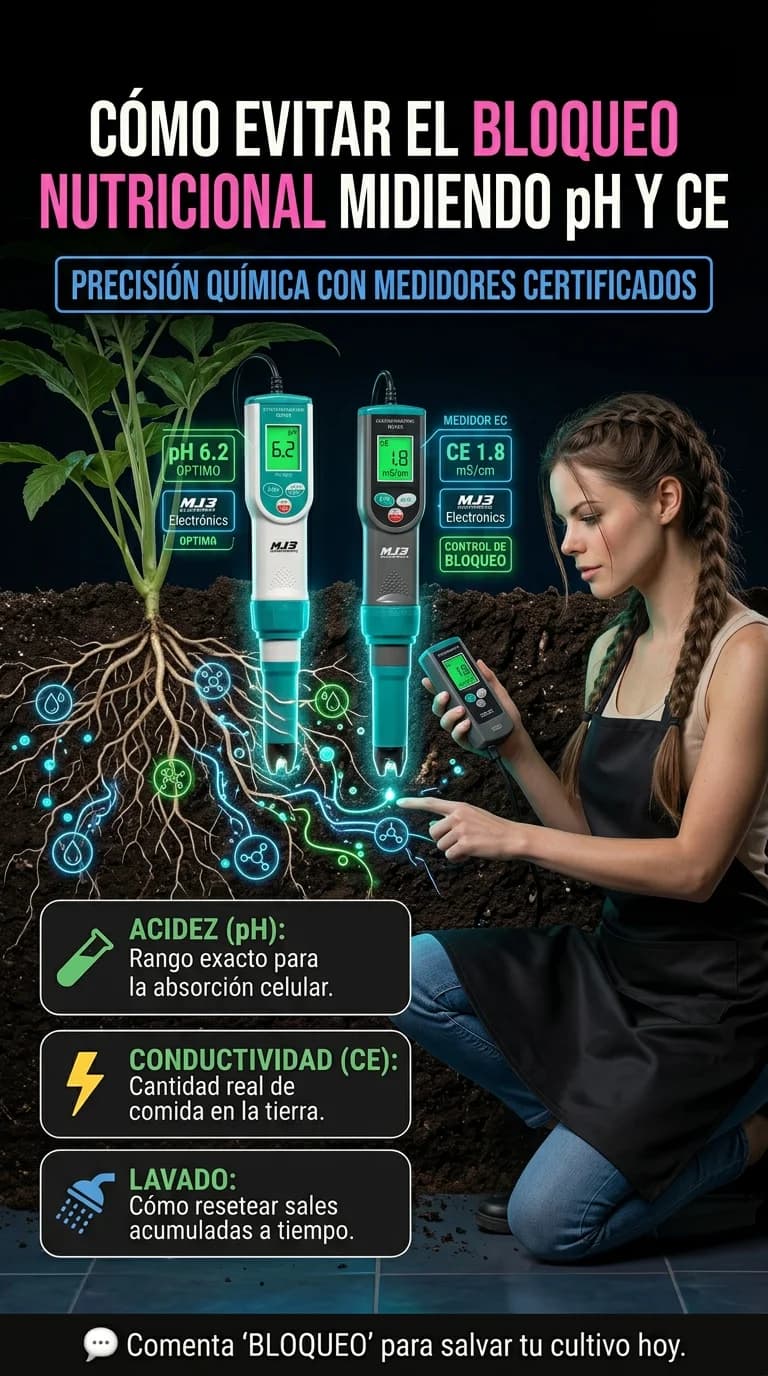
How to Read pH and EC in Substrate: A Practical Guide to Preventing Nutrient Lockouts in Indoor and Outdoor Growing

Ideal light and distance for each stage: How to avoid light stress and maximize photosynthesis with LED, HPS, and CMH
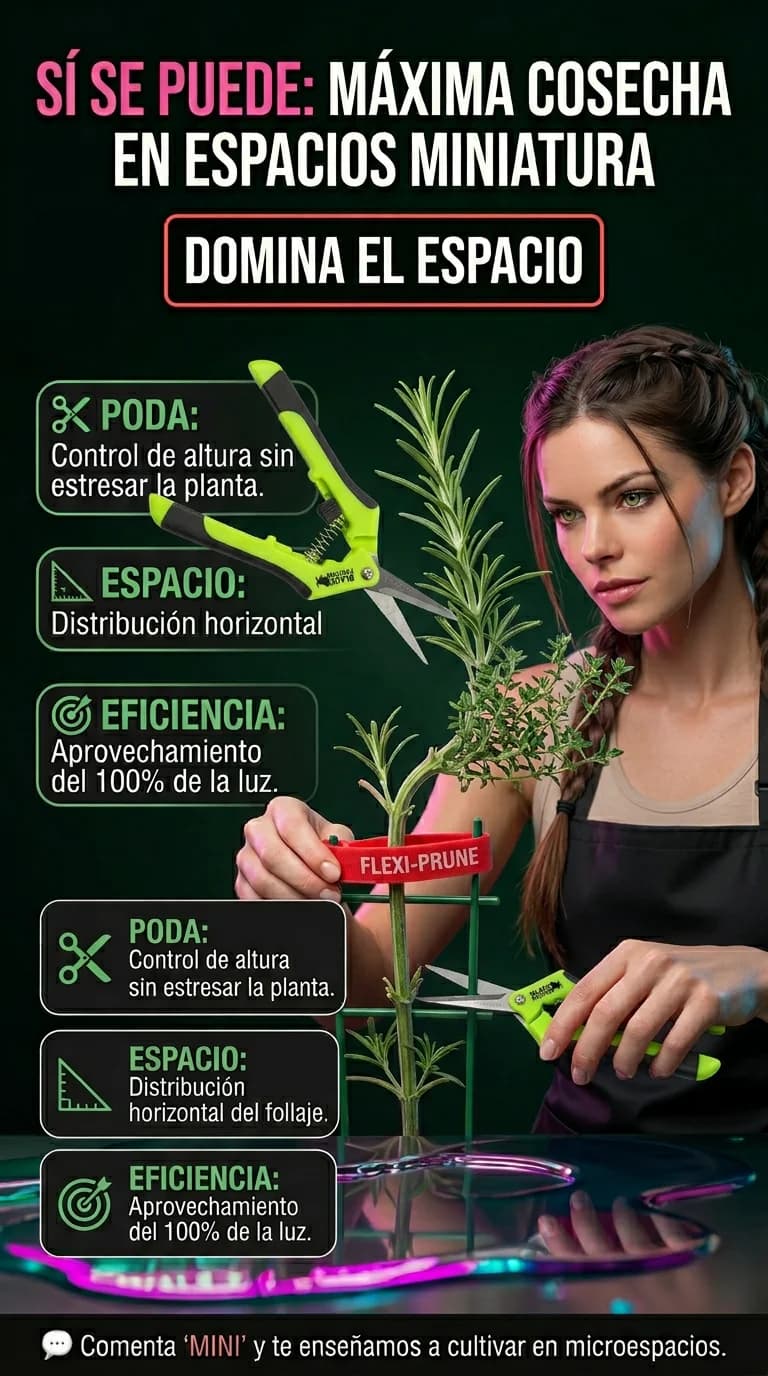
Pruning and LST Without Fear: Low-Stress Techniques to Increase Production in Small Spaces