

Silicon in Cannabis: The Forgotten Nutrient That Strengthens Stems, Improves Pest Resistance, and Increases Yield
Silicon, although not essential for the basic cannabis life cycle, strengthens stems, improves pest resistance, and increases yield. This forgotten nutrient is a strategic ally for growers seeking quality and professional performance.
Silicon in Cannabis: The Forgotten Nutrient That Strengthens Stems, Improves Pest Resistance, and Increases Yield
When we talk about nutrition in cannabis cultivation, most growers focus on the classic NPK trio (nitrogen, phosphorus, and potassium), calcium, and magnesium. However, there is a nutrient that, although not essential for the plant's basic life cycle, has become a strategic ally for any grower seeking professional quality and yield: silicon.
This element, often overlooked in standard fertilization programs, can make the difference between a vulnerable crop and a steel-like plant capable of withstanding stress, pests, and adverse weather conditions. In this article, we will explore why silicon deserves a prominent place in your nutrient schedule.
Why Is Silicon So Important for Cannabis?
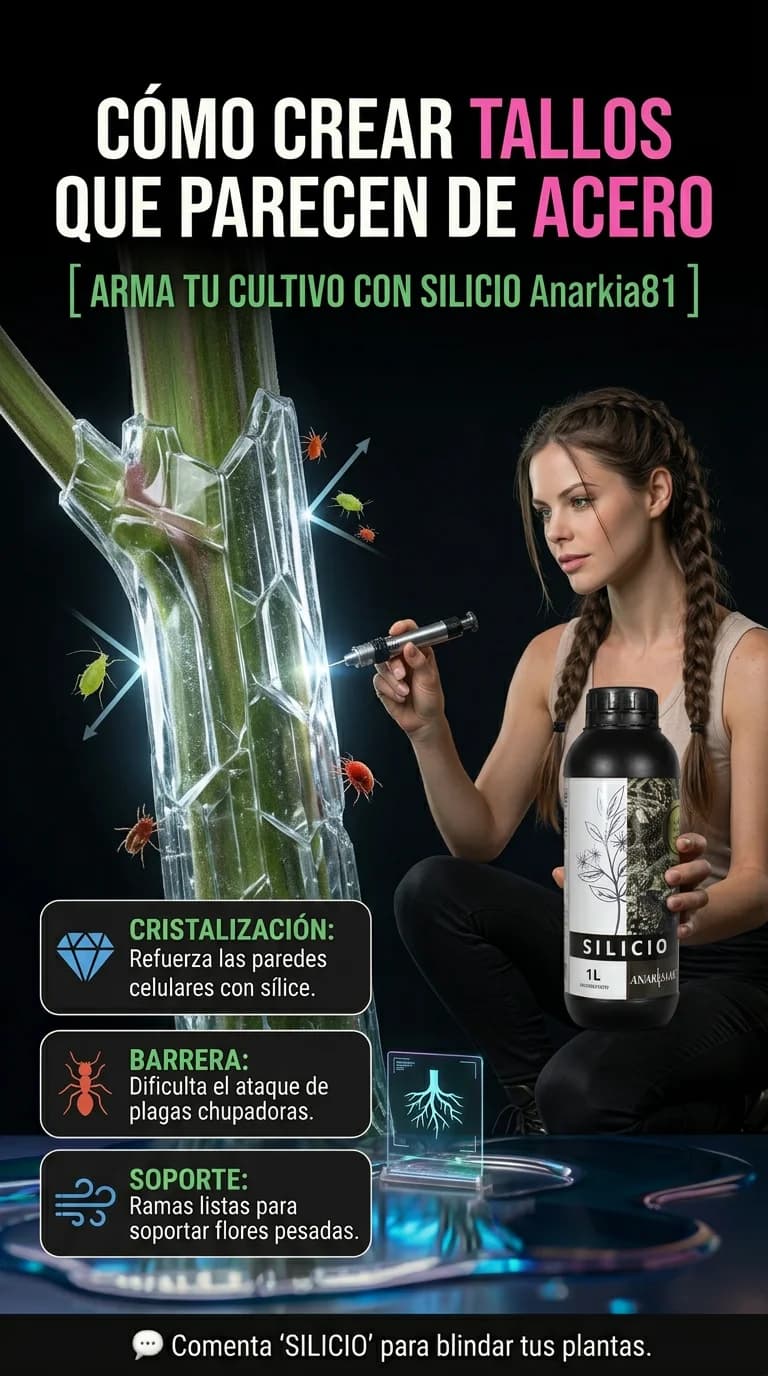
Silicon (Si) is the second most abundant element in the Earth's crust, but in modern growing substrates — especially in hydroponic systems, coco coir, or rockwool — it is often practically absent. Cannabis plants absorb it in the form of monosilicic acid (H₄SiO₄), and once inside, it is deposited in cell walls, forming a glass-like structure (amorphous silica).
This deposit acts as an internal skeleton that strengthens each cell, creating sturdier stems, more resistant branches, and thicker leaves. But its benefits go far beyond simple physical structure.
When plants have adequate amounts of silicon, natural defense mechanisms are activated that improve resistance to fungi such as powdery mildew, downy mildew, and botrytis. Additionally, silicon reduces the transpiration rate and improves tolerance to heat, drought, and sudden temperature fluctuations.
Structural Strengthening: Thicker Stems and Heavier Buds
One of the most visible effects of silicon is the thickening of main stems and lateral branches. In cannabis varieties that tend to develop dense, heavy buds, weak stems can lead to breakage or the need for excessive staking. With silicon, plants develop a backbone capable of supporting large inflorescences without bending.
This strengthening also translates into better water and nutrient transport. With more rigid and efficient cell walls, the vascular system works with greater precision, which is reflected in more vigorous growth during the vegetative phase and better distribution of photoassimilates during flowering.
For growers working with high-intensity LED lighting, silicon takes on special relevance. As detailed in our technical knowledge base on light optimization, plants under LEDs experience additional stress due to the high photon density. Silicon acts as a shield that mitigates this abiotic stress, allowing the plant to make the most of the light without suffering damage to foliar tissue.
Pest and Disease Resistance: The First Line of Defense
Silicon is not a pesticide, but it functions as a physical immunity system. When deposited in cell walls, it creates a mechanical barrier that hinders the penetration of pathogenic fungi and the sucking of insects such as aphids, thrips, or spider mites.
Furthermore, silicon activates the plant's systemic defense pathways. In the event of a pathogen attack, plants supplemented with silicon produce phenolic compounds and phytoalexins more quickly and efficiently. This means that even if a pest manages to overcome the physical barrier, the plant will respond more forcefully.
In conditions of high humidity or poor ventilation — factors that favor the appearance of fungi — silicon becomes a lifeline for your crop. Stems and leaves treated with silicon are significantly less prone to developing fungal infections.
Increased Yield and Final Quality
The impact of silicon on yield is not a myth. By improving photosynthetic efficiency, reducing stress, and strengthening the plant's structure, ideal conditions are created to maximize production. Studies on commercial cannabis crops have shown increases of between 10% and 20% in the dry weight of inflorescences when silicon is applied consistently.
Quality also benefits. Buds developed with silicon tend to be denser, with a better weight-to-volume ratio and greater trichome production. The strength of the stems allows plants to maintain an optimal posture throughout flowering, maximizing light exposure for all branches.
How to Apply Silicon in Your Grow
To obtain all these benefits, it is essential to use a highly assimilable source of silicon. Not all silicon products on the market are equal. Formulations based on stabilized potassium silicate offer the best bioavailability for roots.
In our catalog, we have [product:silicio-anarkia81-500-ml] and [product:silicio-anarkia81-1-l], two presentations of a professional supplement that provides silicon in the most accessible form for cannabis. Its formulation allows rapid root absorption, strengthening cell structure from the first watering and providing total protection against adverse weather conditions.
The recommended dosage usually ranges between 0.5 and 1 ml per liter of water, applied
More articles

Complete guide to pH and EC in cannabis cultivation: How to calibrate, measure, and adjust without harming your plants
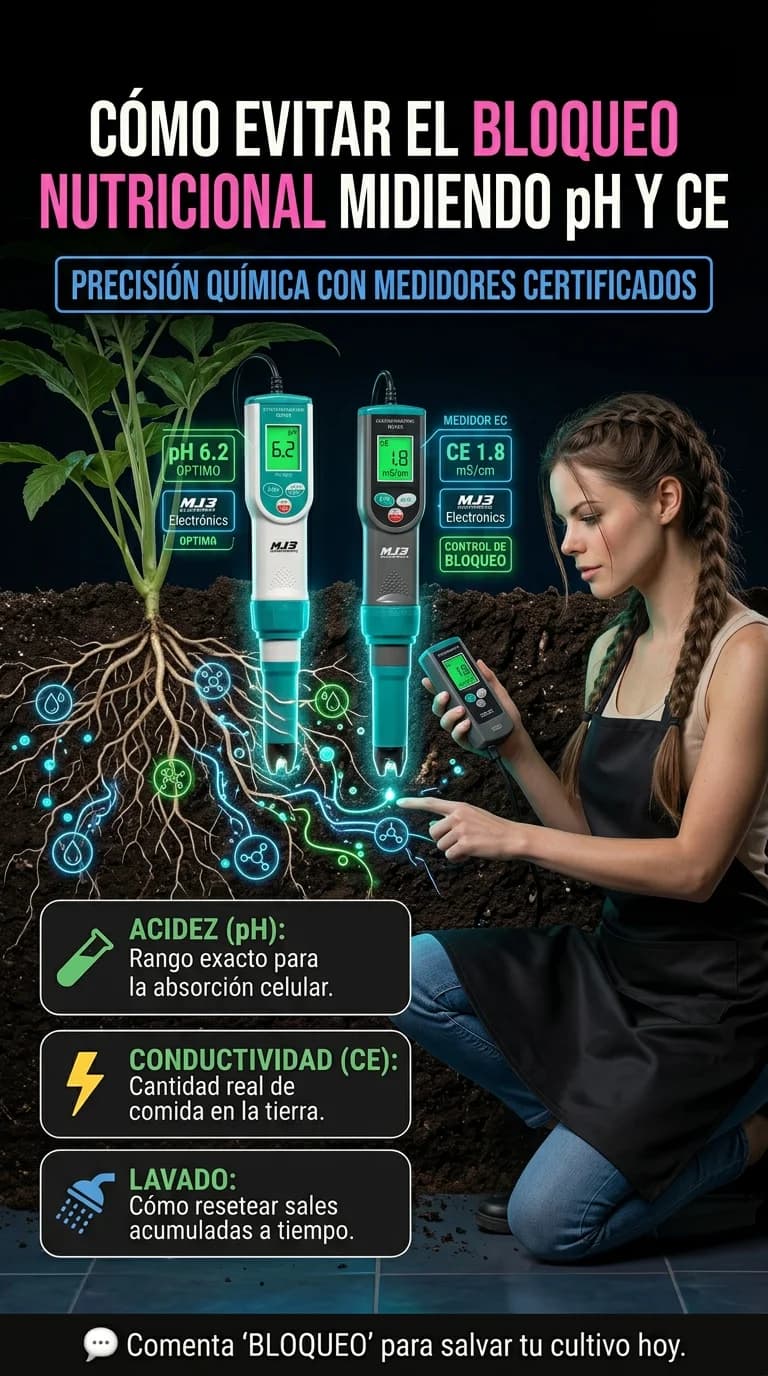
How to Read pH and EC in Substrate: A Practical Guide to Preventing Nutrient Lockouts in Indoor and Outdoor Growing

Ideal light and distance for each stage: How to avoid light stress and maximize photosynthesis with LED, HPS, and CMH