

Guide to Apical Pruning and LST for Maximizing Light Penetration in Indoor Growing with Next-Generation LEDs
Apical pruning and LST are essential techniques to maximize LED light penetration in indoor cannabis cultivation, creating a uniform canopy that takes advantage of every photon. Even with high-efficiency lights, the light is useless if it doesn't reach the lower buds, making these techniques key to optimizing yield.
Guide to Apical Pruning and LST for Maximizing Light Penetration in Indoor Growing with Next-Generation LEDs
Next-generation LED lighting has revolutionized indoor cannabis cultivation, offering full spectrums and efficiencies exceeding 3.2 µmol/J. However, even with fixtures like the [producto:mj3-rs-720w-california-led-grow-light-3-2-umol-j] or the [producto:black-panter-3-3-720-w], the most powerful light is useless if it doesn't reach the lower buds. The key lies in combining apical pruning and LST (Low Stress Training) techniques to create a uniform canopy that takes advantage of every photon. In this technical guide, based on photobiology principles applied to Cannabis sativa L., we explain how to do it step by step.
Why is Light Penetration Critical with High-Efficiency LEDs?
Modern LEDs, such as those incorporating Samsung LM301H Evo chips, emit highly directional light. Unlike HPS lights, which disperse heat and light more evenly, LEDs concentrate their energy in a narrower beam. This means that upper leaves can become saturated with light (reaching a PPFD of 900-1100 µmol/m²/s), while lower branches remain in the shade, with values below 200 µmol/m²/s.
Photobiology teaches us that cannabis needs a minimum DLI (Daily Light Integral) of 25-40 mol/m²/day during flowering to produce dense buds. If we don't manage the plant's architecture, the lower parts barely receive 10-15% of the incident light. This is where apical pruning and LST come in.
Apical Pruning: The First Cut to Break Apical Dominance
Apical pruning involves removing the terminal meristem of the main stem. This stops the production of auxins, the hormone that inhibits the growth of lateral branches. By cutting the tip, the plant redirects its energy towards lateral shoots, creating multiple main colas.
When and how to do it?
- Perform the first apical pruning when the plant has 4-5 nodes (usually in week 3-4 of vegetative growth).
- Cut just above the third or fourth node, leaving at least 2-3 complete nodes.
- Use sterilized scissors to prevent infections.
- Wait 7-10 days for the plant to recover before applying LST.
Direct benefit: By creating 2, 4, or 8 main colas (depending on whether you repeat the pruning), you increase the surface area exposed to light. With a [producto:supermax-gtr-730-w], which offers uniform PPFD in a 1.2x1.2 m area, an apical-pruned plant can double its yield compared to an unpruned one.
LST: Taming the Branches for a Perfect Canopy
LST (Low Stress Training) is the ideal complement to apical pruning. It involves bending and tying branches so they grow horizontally, rather than vertically. This exposes all shoots to the same light intensity, eliminating internal shadows.
Steps for effective LST:
- Prepare materials: Use rubber-coated wire, adjustable ties, or training clips. Do not use materials that can cut the stem.
- Bend gently: Tilt the main stem to 45-90 degrees relative to the pot. Tie the stem to the pot or a support net.
- Distribute branches: Spread the lateral branches out like a fan, tying them to different points so that none is on top of another.
- Weekly maintenance: Adjust the ties every 3-4 days so the branches continue growing horizontally. The tips should always seek the light, so redirect them towards the center of the canopy.
Optimal result: A completely flat canopy, where each shoot receives a similar PPFD. With a [producto:black-panter-3-3-720-w] emitting 3.3 µmol/J, you can ensure that even the lowest branches receive 500-600 µmol/m²/s, the ideal range for flowering.
Combined Strategy: Apical Pruning + LST + Undercanopy Lighting
To maximize light penetration in professional cultivation, apical pruning and LST are complemented with supplemental undercanopy lighting. The [producto:undercanopy-120w-mj3] is a 120W LED bar designed to be activated from day 15 of flowering (12/12 h). Placed 15-20 cm below the canopy, it illuminates the lower parts that escape the main beam.
Recommended protocol:
- Week 1-2 of flowering: Perform the final apical pruning and apply LST to level the canopy.
- Day 15 of flowering: Install the undercanopy bars. Adjust the intensity to 50% for 3 days to acclimate the plants.
- Week 3-6: Keep the bars at 100% during the same photoperiod as the main lights.
- Week 7-8: Reduce intensity to 50% to avoid light stress during maturation.
Technical data: The combination of apical pruning, LST, and undercanopy can increase lower bud production by up to 30-40%, according to applied photobiology studies. Additionally, it improves
More articles

Complete guide to pH and EC in cannabis cultivation: How to calibrate, measure, and adjust without harming your plants
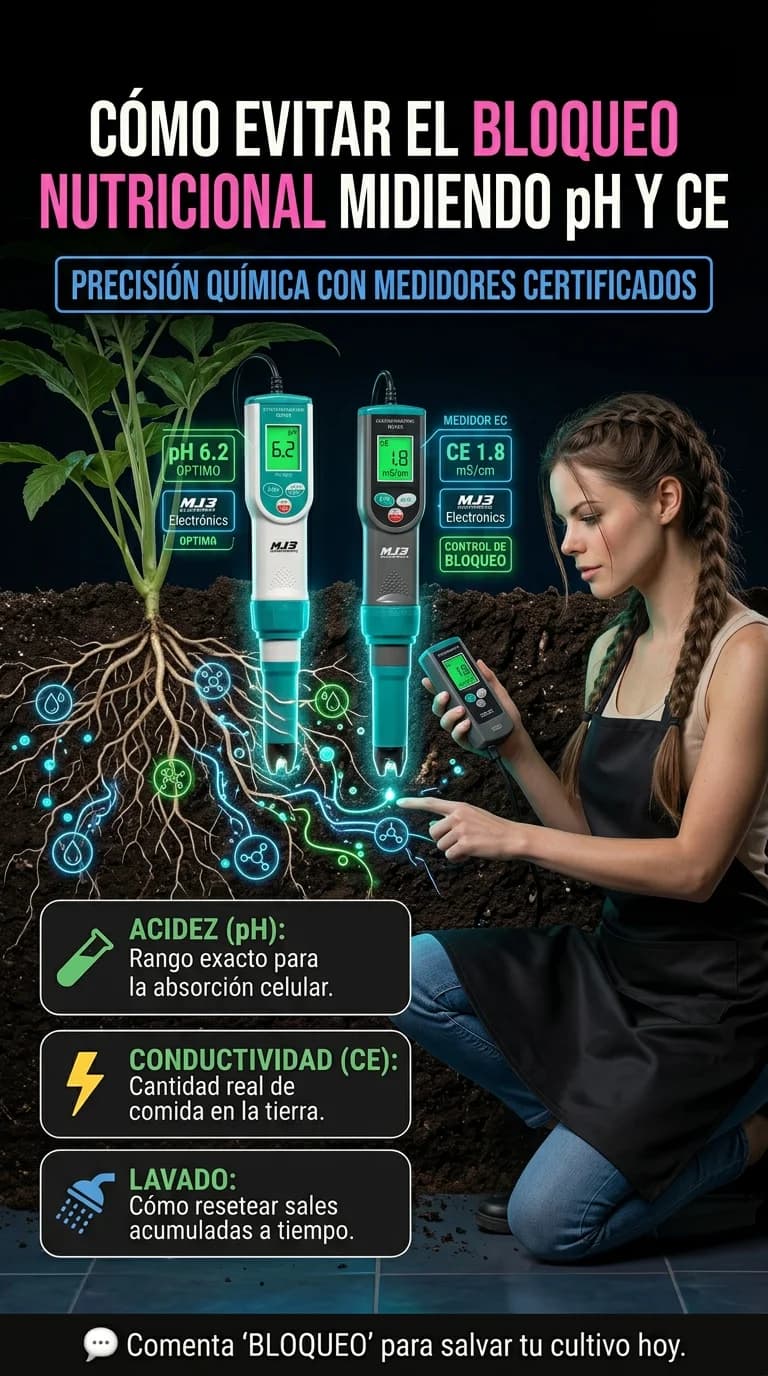
How to Read pH and EC in Substrate: A Practical Guide to Preventing Nutrient Lockouts in Indoor and Outdoor Growing
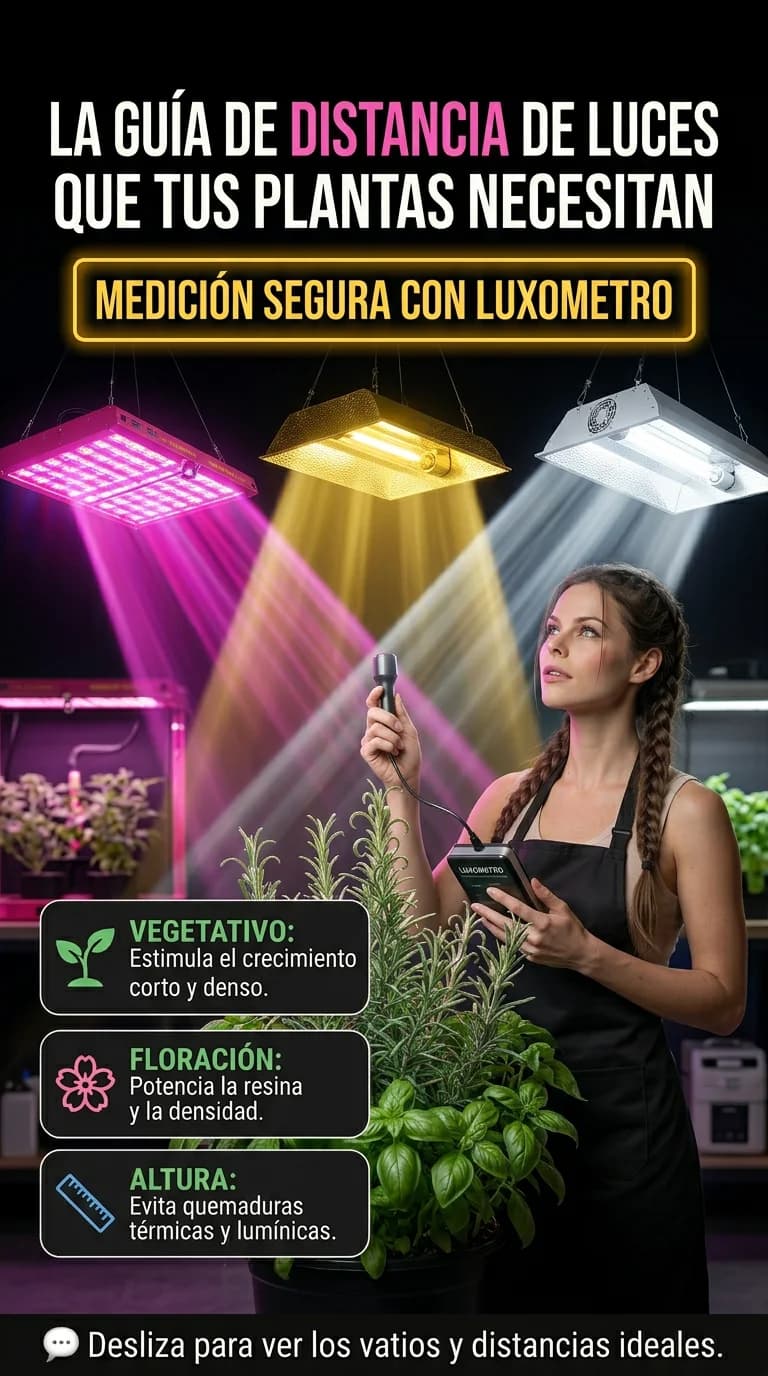
Ideal light and distance for each stage: How to avoid light stress and maximize photosynthesis with LED, HPS, and CMH