

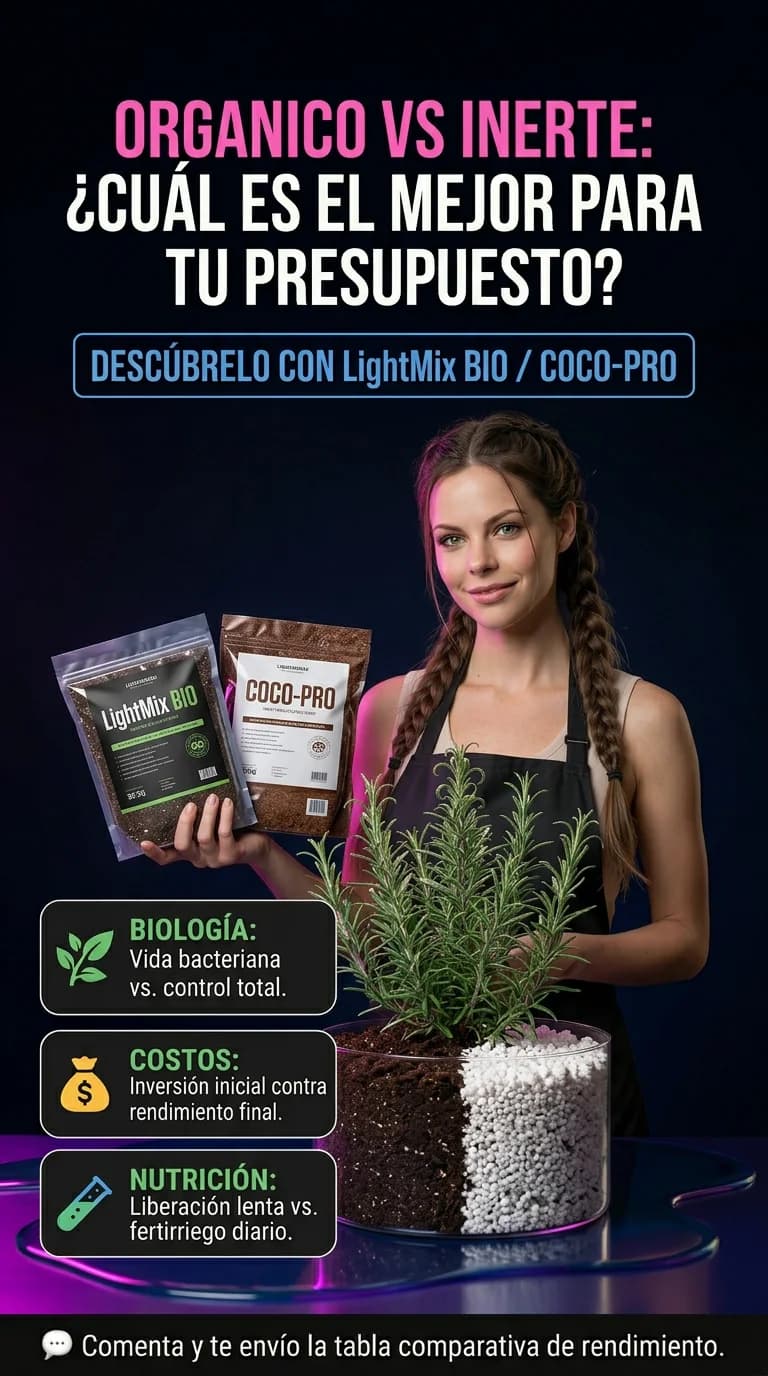
Complete guide to organic vs. inert substrates: which to choose based on your growing style and budget
The guide compares organic and inert substrates, explaining that organic ones decompose with microbes and require less fertilization, while inert ones offer greater control over nutrients and watering. The choice depends on the grower's style, budget, and experience level.
Complete guide to organic vs. inert substrates: which to choose based on your growing style and budget
Choosing the right substrate is one of the most important decisions you'll make as a grower. It not only determines how your plants' roots will develop, but also influences watering frequency, nutrient needs, and ultimately, the quality of your harvest. In this complete guide, we break down the differences between organic and inert substrates so you can choose the one that best suits your growing style and your wallet.
What are organic substrates and how do they work?
Organic substrates are made from natural materials that contain carbon and, over time, decompose thanks to microbial activity. Classic examples are peat, compost, coconut coir (although its origin is organic, its behavior is more inert), worm castings, and pine bark.
The key to organic substrates is that they act as a living ecosystem. Microorganisms break down organic matter, releasing nutrients gradually. This means you don't need to fertilize as often, since the substrate itself feeds the plant during the first few weeks. Additionally, they retain moisture very well and improve soil structure, promoting root development.
Main advantages:
- Lower risk of over-fertilization.
- Higher water retention capacity (ideal for beginners).
- More complex flavor and aroma in herb and vegetable crops.
- Sustainability if you choose options like coconut coir or local compost.
Disadvantages:
- They tend to be heavier and harder to handle in large pots.
- They can harbor pests or pathogens if not properly composted.
- Decomposition reduces substrate volume over time.
- Higher price for quality mixes.
Inert substrates: total control, zero complications
Inert substrates, such as perlite, vermiculite, rockwool, expanded clay (hydroton), or silica sand, do not provide nutrients on their own. Their main function is to support the plant and provide aeration and drainage. Since they contain no organic matter, there is no decomposition or significant microbial activity.
This makes them the perfect blank canvas for growers who want absolute control over nutrition. Each watering must include a solution of mineral or hydroponic fertilizers, allowing you to precisely adjust pH and nutrient concentration at each stage of the cycle.
Main advantages:
- Maximum control over plant feeding.
- They don't compact or lose volume.
- Reusable if properly washed and disinfected.
- Excellent drainage and root oxygenation.
- Lighter and easier to handle.
Disadvantages:
- Require more technical management (constant EC and pH measurement).
- Higher watering and fertilization frequency.
- Risk of nutrient lockout if pH is not maintained correctly.
- High initial cost if using hydroponic systems.
Which to choose based on your growing style and budget?
There is no single answer, but we can guide you based on your profile as a grower:
If you are a beginner or grow outdoors: Organic substrates are your best ally. Being more forgiving of watering and fertilization mistakes, they let you learn without punishing your plants too much. Additionally, outdoors, living soil is enhanced by local fauna. A mix of coconut coir with worm castings and perlite will give you an excellent balance without breaking the bank. You can start with [producto:mezcla-organica-premium] which is already enriched for the first few weeks.
If you are looking for high yields indoors: Inert substrates combined with an automated irrigation system (such as drip or NFT) offer faster and more predictable growth. Rockwool or perlite are ideal for fabric pot grows or hydroponic systems. That said, you will need an EC and pH meter, and specific fertilizers. For this approach, we recommend [producto:kit-hidroponico-basico] which includes inert substrate and starter nutrients.
If your budget is tight: Coconut coir is a fantastic hybrid option: it has an organic origin but behaves almost like an inert substrate (it doesn't provide nutrients). It's cheap, retains moisture well, and drains perfectly. You can use it alone or mixed with 20% perlite to improve aeration. If you opt for pure inert substrates, perlite is the most economical and easiest to find.
If you prioritize sustainability and flavor: Quality organic substrates, such as certified compost or blonde peat mixed with worm castings, produce plants with richer terpene profiles. Additionally, by not relying on synthetic fertilizers, you reduce your chemical footprint. However, invest in a good starting substrate; poor compost can ruin your grow.
Conclusion
The choice between organic and inert substrate is not a matter of good or bad, but of suitability for your level, space, and goals. If you value simplicity and patience, organic will give you flavorful harvests with less maintenance.
More articles
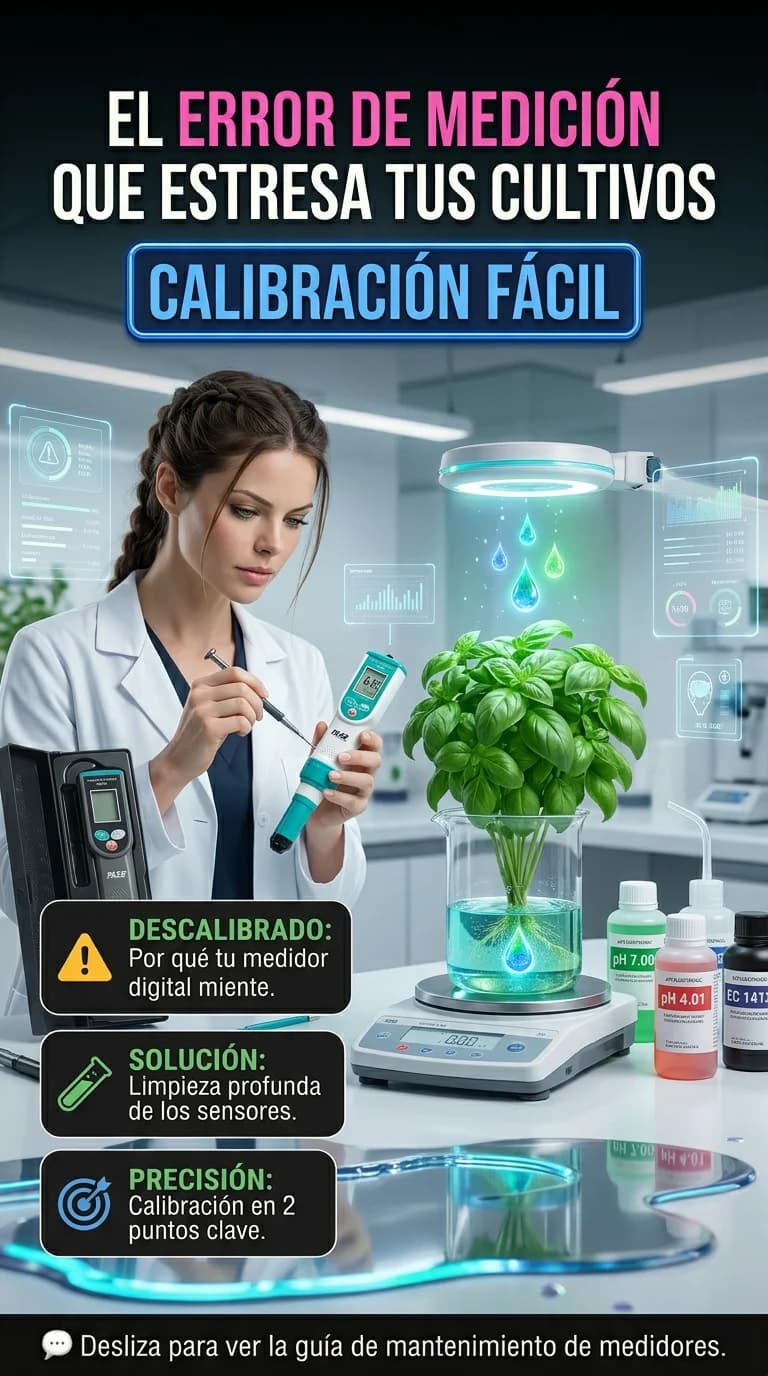
Complete guide to pH and EC in cannabis cultivation: How to calibrate, measure, and adjust without harming your plants
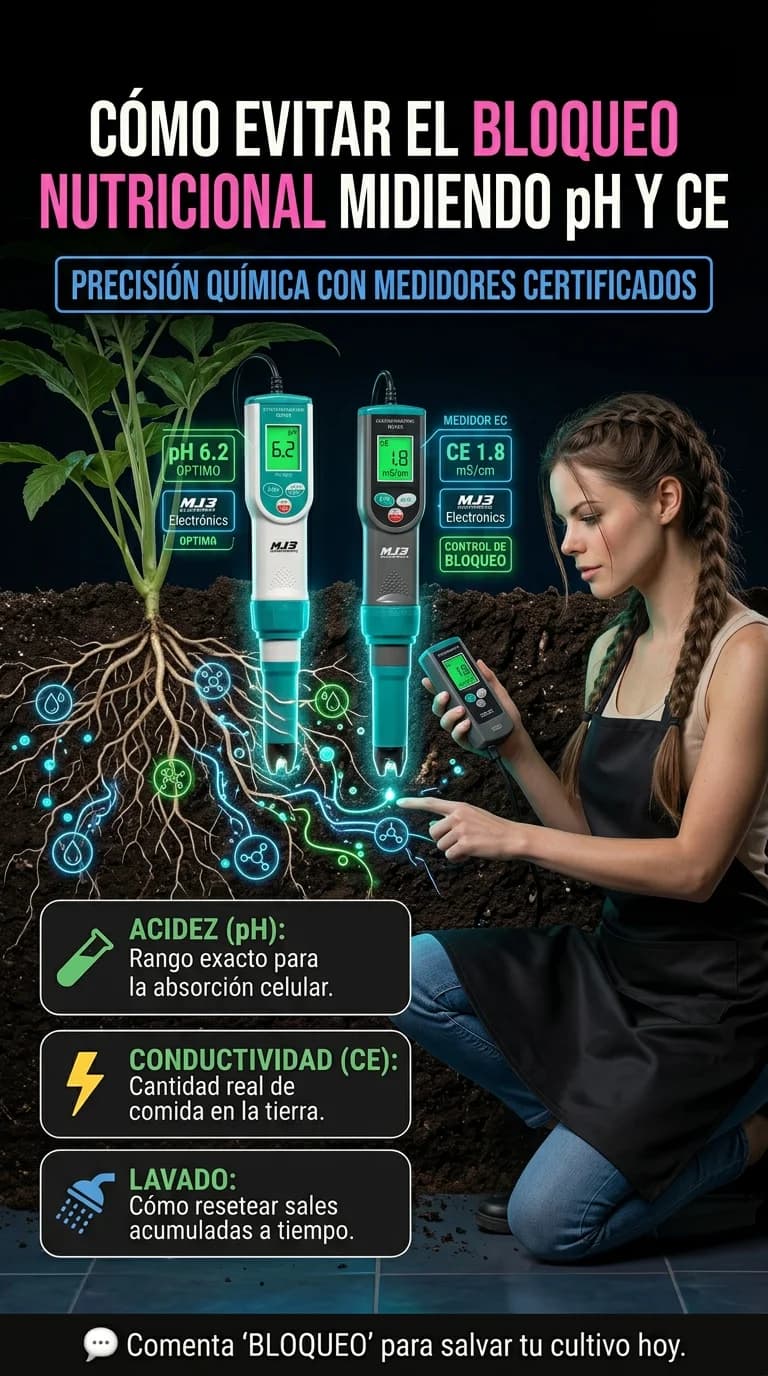
How to Read pH and EC in Substrate: A Practical Guide to Preventing Nutrient Lockouts in Indoor and Outdoor Growing
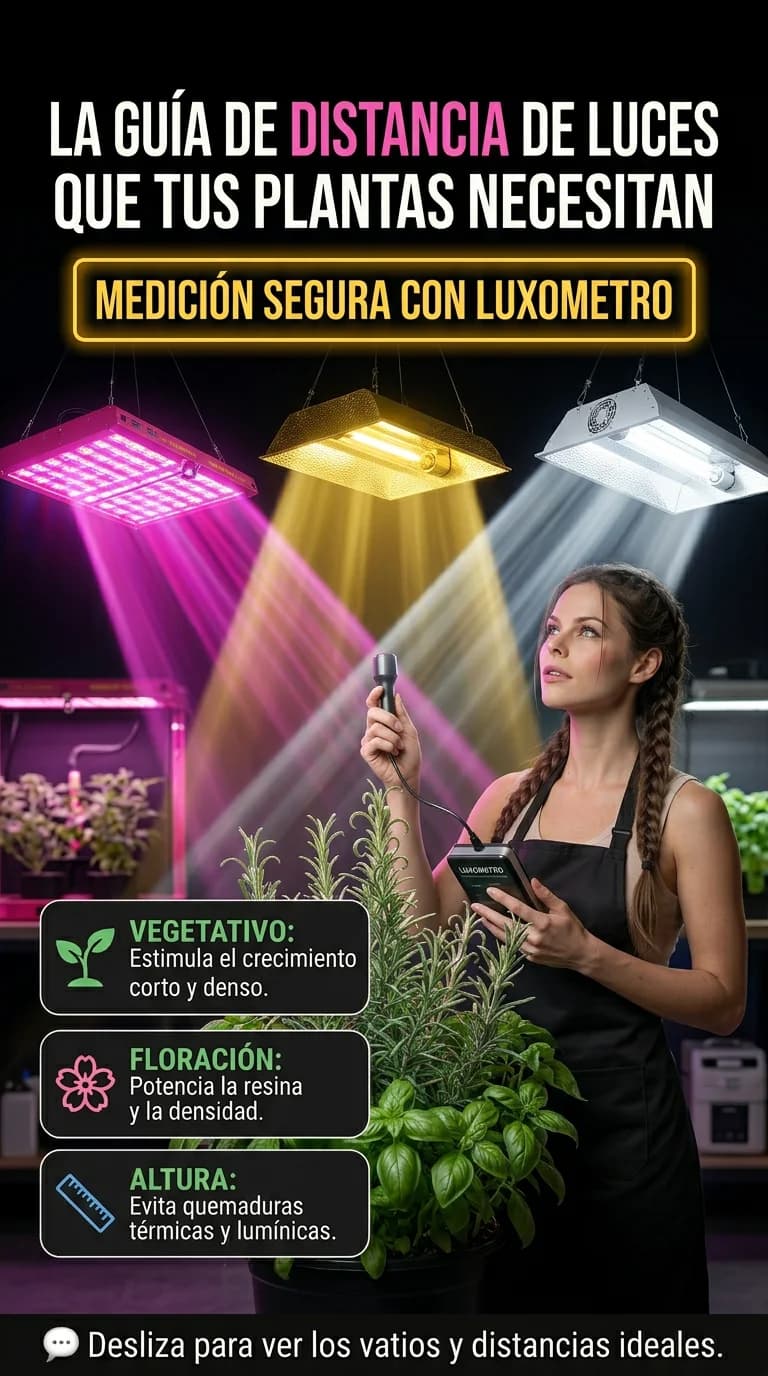
Ideal light and distance for each stage: How to avoid light stress and maximize photosynthesis with LED, HPS, and CMH