

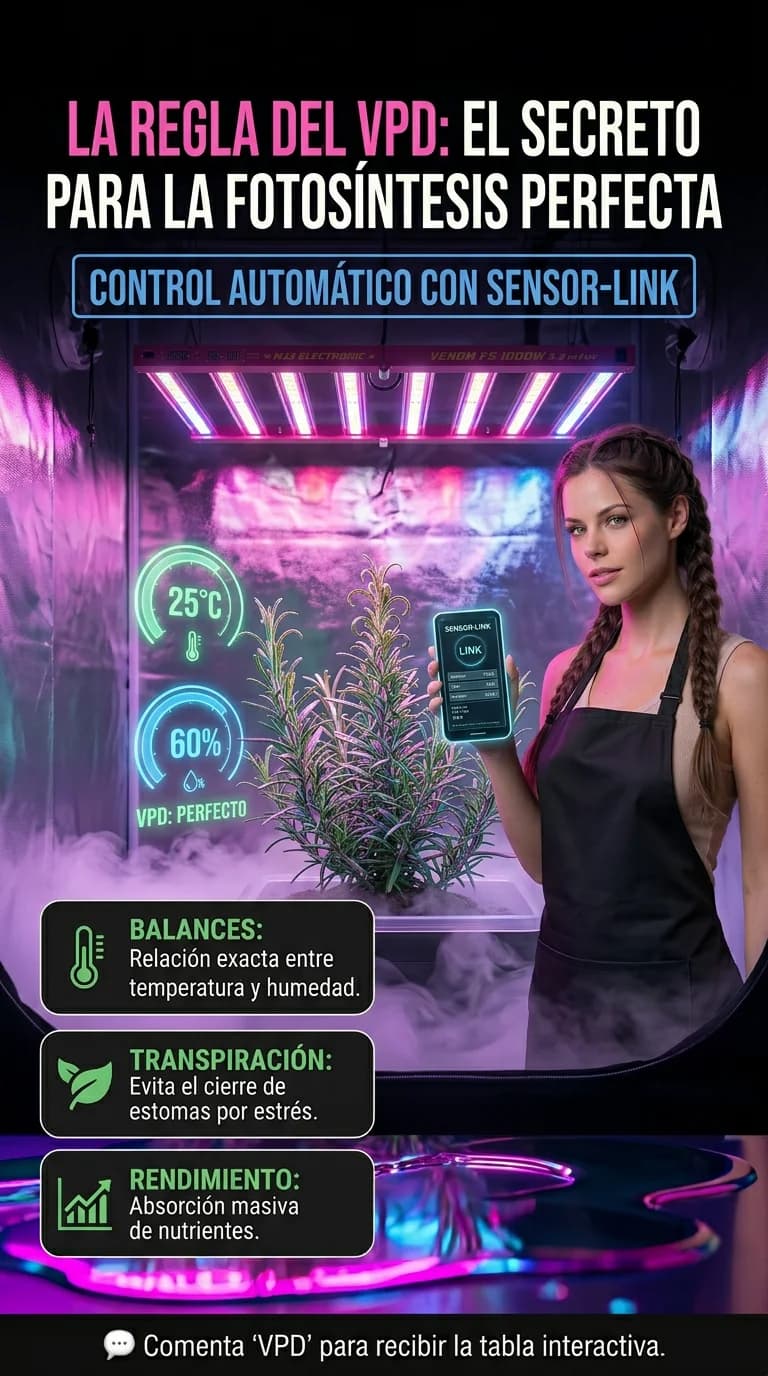
Climate Control in Indoor Growing: Temperature, Humidity, and VPD to Prevent Mold and Maximize Photosynthesis
Precise control of temperature and humidity in indoor cannabis cultivation is crucial to prevent fungi and maximize photosynthesis, with VPD being the key metric to balance these parameters. An imbalance not only reduces yield but also favors pathogens such as gray mold or powdery mildew.
Climate Control in Indoor Growing: Temperature, Humidity, and VPD to Prevent Mold and Maximize Photosynthesis
In indoor cannabis cultivation, climate is just as decisive as genetics or nutrition. A common mistake among beginner growers is focusing solely on light and watering, forgetting that temperature and relative humidity (RH) govern key physiological processes such as photosynthesis, transpiration, and nutrient absorption. When these parameters become unbalanced, not only is yield reduced, but the door is opened to pathogens like gray mold (Botrytis) or powdery mildew. This is where VPD (Vapor Pressure Deficit) comes into play—the metric every professional grower must master.
Temperature: The Plant's Metabolic Engine
The optimal temperature for cannabis varies depending on the growth phase. During vegetative growth, the ideal range is between 22-26 °C with lights on, and no more than 18-20 °C during the dark period. In flowering, temperatures should be kept slightly lower: 20-24 °C during the day and 16-18 °C at night.
Why is this control critical? At temperatures above 28 °C, the plant accelerates cellular respiration, consuming more energy than it produces through photosynthesis. This results in heat stress, airy buds, and increased susceptibility to pests. Below 15 °C, enzymatic activity slows down, preventing the absorption of phosphorus and potassium, leading to nutrient deficiencies.
To maintain stable temperatures, an air extractor with speed control and an air conditioning system are necessary investments. If your indoor space tends to heat up, consider the [product:ventilador-extractor-industrial] to efficiently renew the air.
Relative Humidity (RH): The Double-Edged Sword
Relative humidity determines the plant's ability to transpire and absorb CO₂. In cuttings and seedlings, RH should be high (65-75%) to prevent dehydration of immature roots. During vegetative growth, it is reduced to 55-65%. In flowering, the risk of mold increases dramatically, so RH should drop to 40-50% in the early weeks and to 35-40% in the last 2-3 weeks before harvest.
Excessive humidity (above 60% in late flowering) is the main cause of Botrytis, which destroys buds from the inside. Conversely, too low RH (below 30%) causes stomatal closure, stopping photosynthesis and causing burnt tips.
To control humidity, you can use a quality dehumidifier. The [product:deshumidificador-grow-pro] is designed to maintain precise ranges in growing spaces up to 10 m².
VPD: The Science Behind the Perfect Climate
VPD measures the difference between the amount of water vapor the air can hold (at a given temperature) and the amount it actually holds. It is expressed in kilopascals (kPa) and is the most accurate indicator of the plant's water stress.
Recommended VPD ranges for cannabis:
- Cuttings and seedlings: 0.4 – 0.8 kPa
- Vegetative: 0.8 – 1.2 kPa
- Early flowering: 1.2 – 1.5 kPa
- Late flowering: 1.5 – 1.8 kPa
When VPD is too low (high RH and low temperature), stomata close, transpiration stops, and calcium is not mobilized, causing deficiencies. When VPD is too high (low RH and high temperature), the plant transpires excessively, becomes dehydrated, and leaves curl upward.
To calculate VPD, you don't need complex formulas. An environment meter like the [product:medidor-vpd-digital] gives you real-time readings and allows you to precisely adjust heaters, humidifiers, or dehumidifiers.
Integrated Strategy: How to Prevent Mold and Maximize Photosynthesis
The goal is not to maintain fixed values, but to balance temperature and humidity so that VPD is in the optimal range. Here is a practical guideline:
- Measure and record: Place sensors at canopy height. Temperature and RH vary between the top and bottom of the crop.
- Adjust ventilation: A constant airflow (0.5-1.0 m/s) breaks up stagnant humidity pockets and strengthens stems. The [product:ventilador-oscilante-grow] is ideal for moving air without directly blasting the plants.
- Control the night: During lights-off, temperature drops and RH rises. If nighttime VPD falls below 0.4 kPa, activate a gentle heater or a dehumidifier to prevent condensation.
- Link climate and nutrition: Remember that the EC of irrigation should be adjusted according to transpiration. With low VPD (low transpiration), reduce EC to avoid over-fertilization. With high VPD, slightly increase EC to compensate for the higher nutrient demand.
Conclusion
Mastering the indoor climate is not optional—it is the difference
More articles

Complete guide to pH and EC in cannabis cultivation: How to calibrate, measure, and adjust without harming your plants
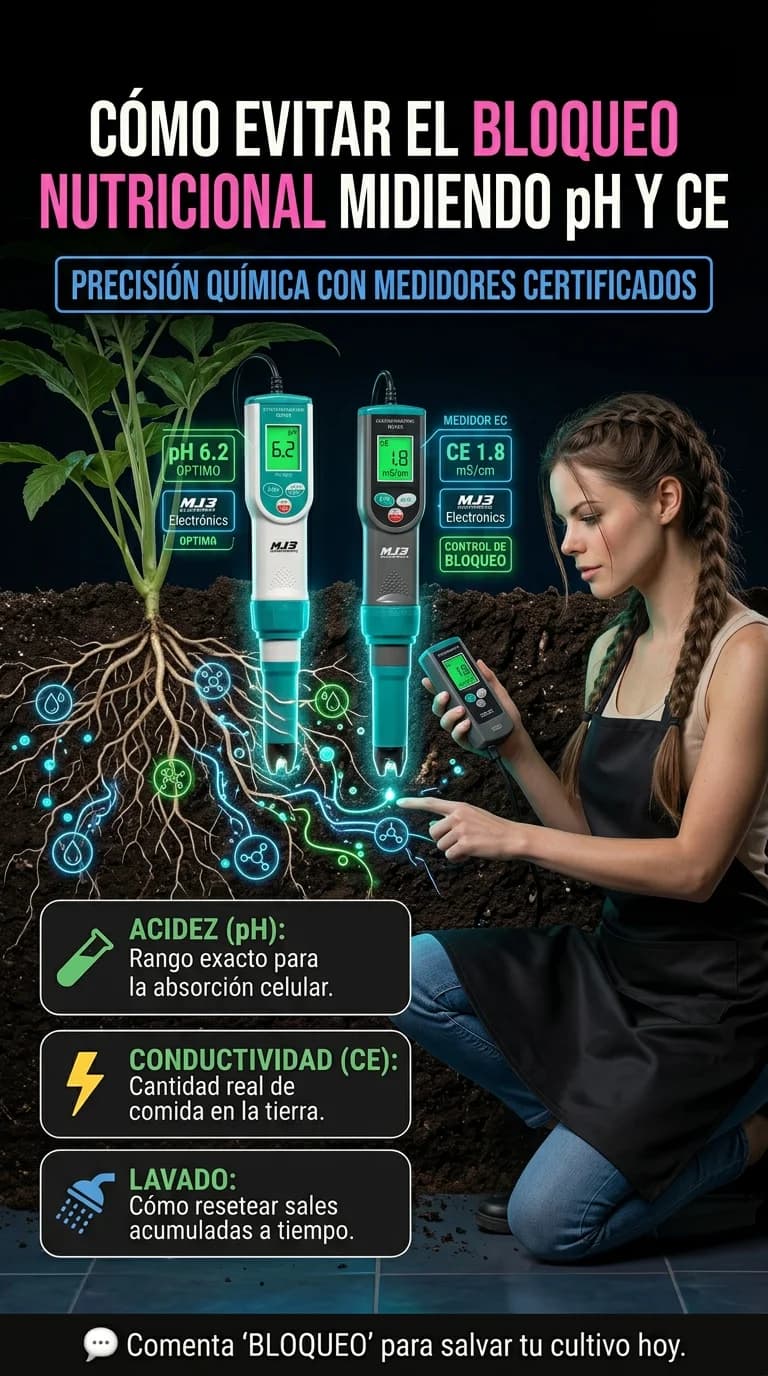
How to Read pH and EC in Substrate: A Practical Guide to Preventing Nutrient Lockouts in Indoor and Outdoor Growing
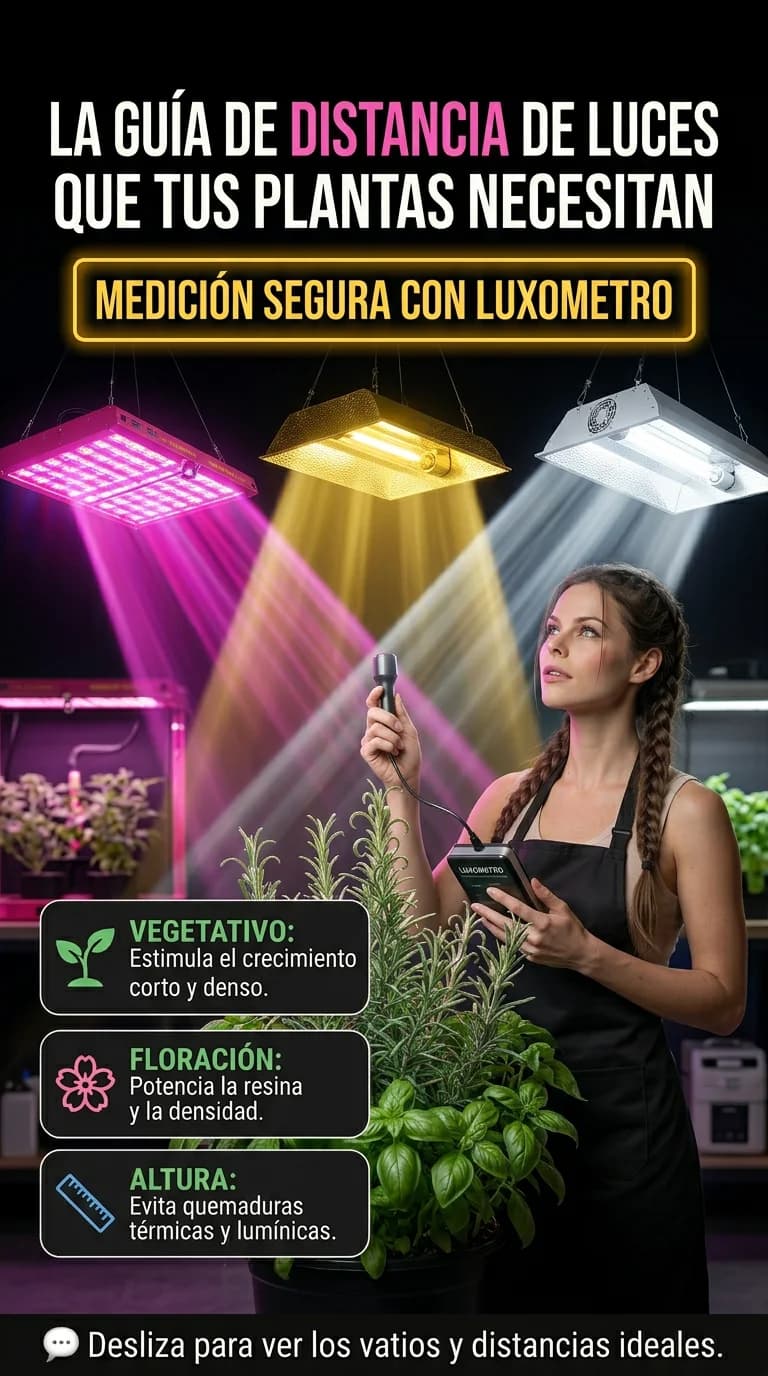
Ideal light and distance for each stage: How to avoid light stress and maximize photosynthesis with LED, HPS, and CMH