

How to Optimize the Flowering Phase with Phosphorus and Potassium Without Over-Fertilizing
The flowering phase is key to obtaining dense and resinous buds, requiring phosphorus and potassium, but over-fertilization can damage plants and reduce harvest quality. The article explains how to apply these nutrients precisely to maximize potential without excess.
How to Optimize the Flowering Phase with Phosphorus and Potassium Without Over-Fertilizing
The flowering phase is the most critical and exciting moment of cultivation. It's when your plants shift from developing vegetative structure to concentrating all their energy on producing dense, resinous, and aromatic buds. To achieve this, two nutrients become absolute protagonists: phosphorus (P) and potassium (K). However, one of the most common mistakes among growers, both novice and experienced, is falling into over-fertilization. The result? Burnt leaves, nutrient lockout, less aromatic harvests, and a harsh taste. In this article, I'll explain how to maximize your plants' potential using phosphorus and potassium precisely, without overdoing it.
The Role of Phosphorus and Potassium in Flowering
To understand how to optimize without over-fertilizing, we first need to know what each nutrient does.
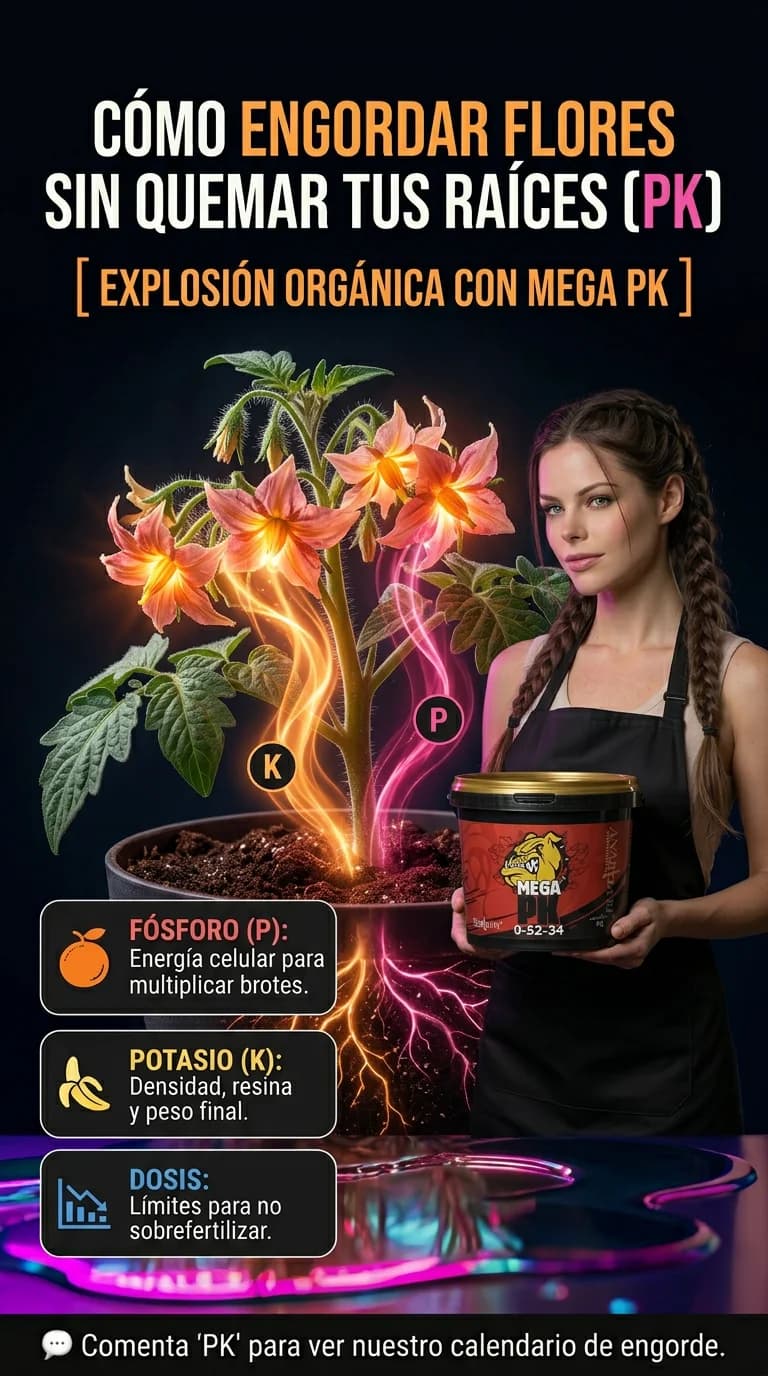
- Phosphorus (P): It is responsible for energy transfer (ATP) and the formation of nucleic acids. During flowering, it promotes the development of larger and more abundant flowers, as well as strengthening the root system. A phosphorus deficiency results in small buds and lower leaves turning purple or reddish.
- Potassium (K): It acts as a regulator of water balance and stomatal opening. It is essential for the synthesis of carbohydrates and proteins, which translates into denser, heavier buds with higher resin production. It also improves resistance to diseases and stress.
The trick is to provide these nutrients in the right proportions and at the right time, avoiding concentration spikes that damage the roots.
Measure EC and pH: Your Best Ally Against Over-Fertilization
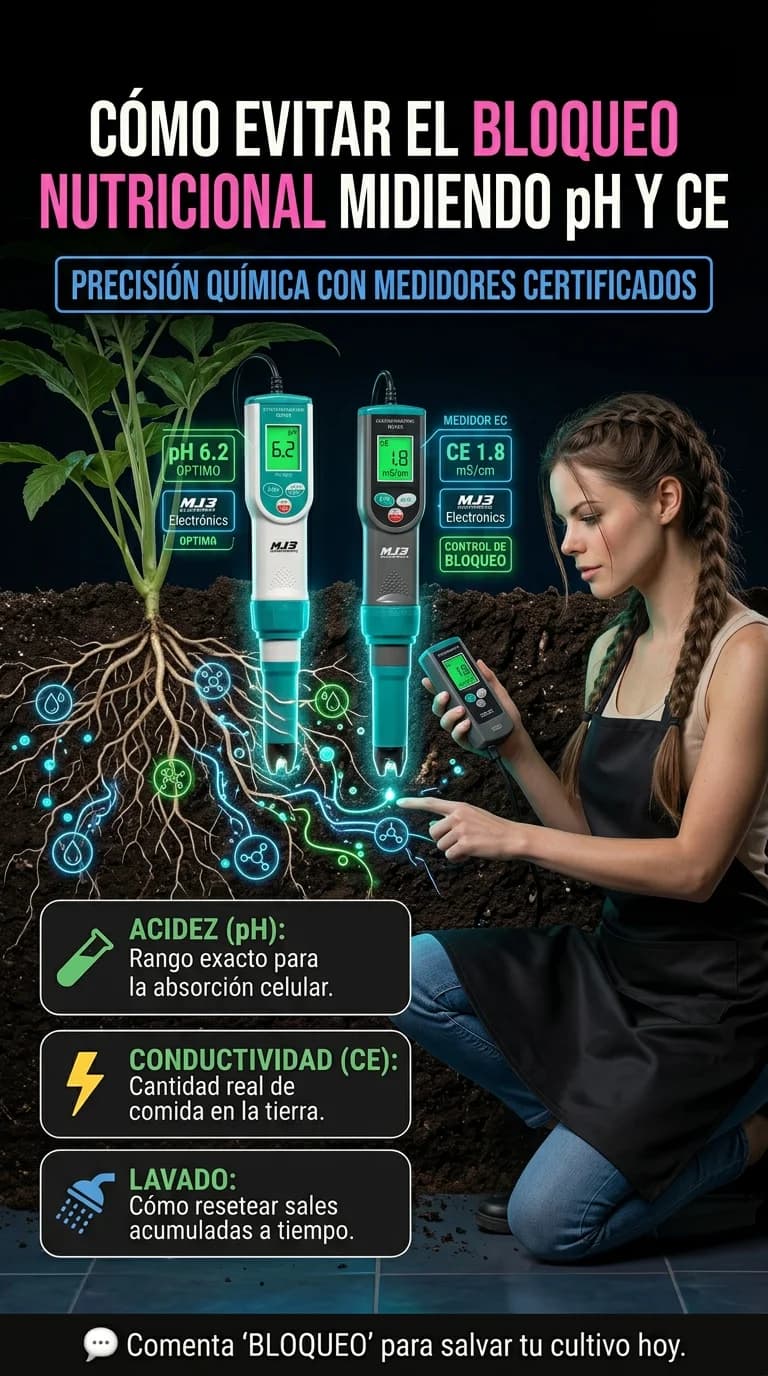
Over-fertilization doesn't always happen from adding too much fertilizer, but from not controlling the electrical conductivity (EC) of the irrigation water. As the FAQ Sector Grow explains, EC measures the concentration of dissolved salts. A very high EC can cause root burns and block the absorption of other nutrients.
During flowering, the recommended ranges are:
- Early flowering (weeks 1-3): EC between 1.8 and 2.2 mS/cm. Here, phosphorus should increase slightly, while nitrogen begins to decrease.
- Mid-flowering (weeks 4-6): EC between 2.2 and 2.6 mS/cm. Potassium rises to its peak.
- Late flowering (weeks 7-9): EC between 1.6 and 2.0 mS/cm. We gradually reduce until the final flush.
Additionally, pH should be maintained at 5.8-6.2 for coco coir and 6.0-6.5 for soil. Incorrect pH can cause phosphorus and potassium to become "locked" in the substrate, even if they are present in the irrigation.
How to Apply Phosphorus and Potassium Without Overdoing It
The key lies in progressive dosing and using products specifically formulated for the final phase. Here are 3 practical strategies:
1. Gradually Reduce Nitrogen
Nitrogen is necessary at the start of flowering, but in excess it delays maturation and produces "fluffy" buds with less flavor. From the third or fourth week, decrease the dose of grow fertilizer and increase the bloom fertilizer. If your base fertilizer has an NPK ratio of 1-3-4 or similar, you're on the right track.
2. Introduce a Specific Flowering Booster
To maximize resin production and density without the risk of over-fertilization, products like [producto:orange-compactor-anarkia81-1-kg] are ideal. This flowering stimulator and bud compactor contains enzymes and a high potassium content, allowing for a final push without aggressively raising EC. It is applied in the last 3-4 weeks, just when plants need it most.
3. Use Finishing Formulas for the Final Flush
Root flushing is essential to remove excess salts and improve harvest flavor. However, it is often done abruptly, stressing the plant. This is where products like [producto:anarkia81-piruleta-1-l] come into play, a liquid organo-mineral finishing formula designed for the final phase. Its use allows maximizing bud completion, promoting more uniform drying, and improving harvest consistency, all while reducing EC in a controlled manner. It is available in 0.5 L, 1 L, and 5 L formats, adapting to any cultivation scale.
Signs You're Overdoing It with Phosphorus and Potassium
Learning to read your plants is the best way to avoid mistakes. Pay attention to:
- Burnt leaf tips: This is the clearest symptom of high EC. Reduce the dose immediately.
- Yellow lower leaves with brown edges: This may indicate excess potassium, which blocks the absorption of calcium and magnesium.
- Buds that mature too quickly or become brittle: A sign that potassium is in excess.
- Brown or foul-smelling roots
More articles

Complete guide to pH and EC in cannabis cultivation: How to calibrate, measure, and adjust without harming your plants
How to Read pH and EC in Substrate: A Practical Guide to Preventing Nutrient Lockouts in Indoor and Outdoor Growing

Ideal light and distance for each stage: How to avoid light stress and maximize photosynthesis with LED, HPS, and CMH